How many currency pairs should you follow at once?
A question that comes up again and again in training: how many currency pairs can you watch effectively? The answer: it depends on your personality, and on the…
Read more

Let us be clear from the start: anyone who tells you that successful people decide fast is trying to drive you into a bad decision. But life is not always fair, and it sometimes forces us to decide quickly - quickly and well.
Successful people decide slowly, not because they are dragging their feet, but because they research, examine, analyse, weigh things up and make a grounded decision. In a great many cases there is an opportunity to do that (whether they take it is another question), and in a great many cases there is not.
Sitting in a car, plenty of occasions arise where an immediate decision has to be made. In competitive sport it is the same. On the markets, likewise. Whatever emergency we examine, the decision has to be fast and it has to be right, because lives depend on it.
What is the secret of good decisions made fast? The answer: the procedure.
When an emergency arises on an ocean liner, the captain does not start weighing things up at length; they identify the signs, establish what kind of case they are dealing with, and take out the appropriate procedure, which they carry out together with the crew. In the overwhelming majority of cases that procedure handles the situation. When it does not, either the captain chose the wrong procedure, or spent too long looking for the signs, or some of the crew panicked, or complications arose that were not accounted for when the procedure was developed.
The existence of a procedure, knowing it, understanding it and having practised it, is on its own enough to eliminate panic, or at least to reduce it.
Behind procedures lie a great deal of experience, research, analysis, deliberation, testing and practice - the more of it, the better they will work. The Second World War ended 77 years ago, and its battles are analysed to this day in order to ground procedures.
So the secret of decisions that are fast and still correct is that beforehand, while there is enough time, we think through the possible situations in depth, prepare for them, practise, and create procedures - and then, when the time comes, we lean on those.
Trading has its own peculiarities too. One of them is that essentially a whole industry has grown up around triggering the trader, that is, driving them into bad and hasty decisions. In this case too, the antidote is the procedure.
More articles
A question that comes up again and again in training: how many currency pairs can you watch effectively? The answer: it depends on your personality, and on the…
Read moreTo understand how a trader can consistently make good decisions, we have to understand the mechanism of decision-making itself. The basis of a good decision is data.
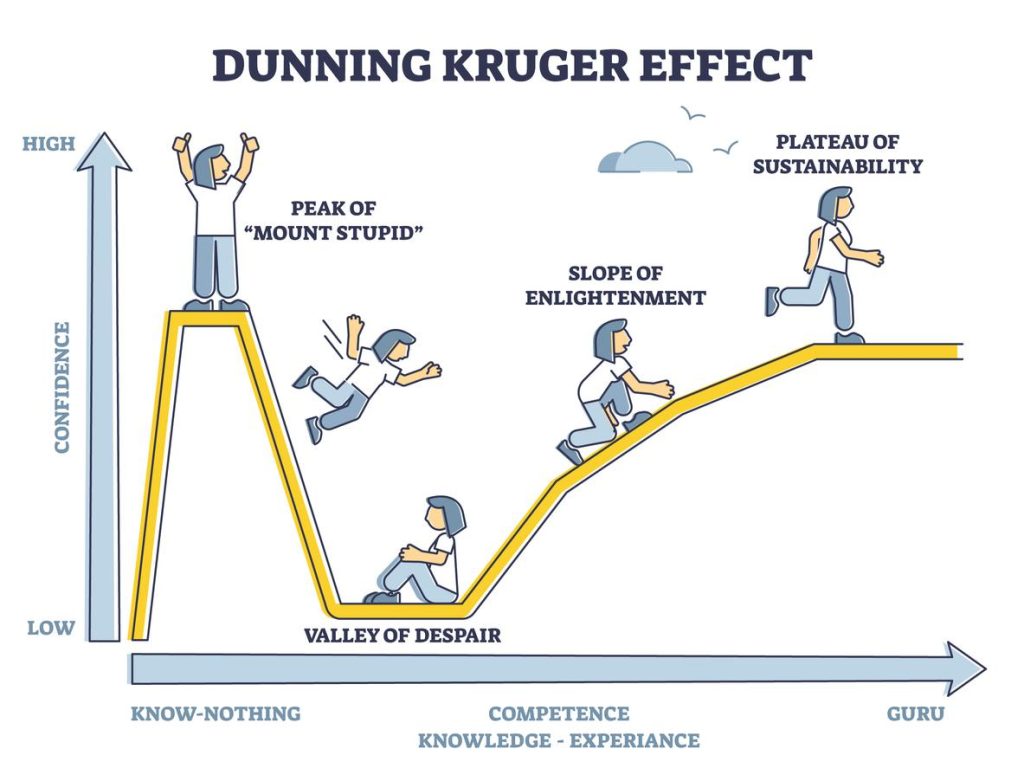
Read moreDavid Dunning and Justin Kruger, researchers at Cornell University, first published their results in 1999, and they came as a serious shock to many. They summed up their…
Read more