How many currency pairs should you follow at once?
A question that comes up again and again in training: how many currency pairs can you watch effectively? The answer: it depends on your personality, and on the…
Read more

To understand how a trader can consistently make good decisions, we have to understand the mechanism of decision-making itself.
Good decisions have been surrounded by admiration in every age. People who decided well often were received with the deepest respect, and in some periods were outright deified - or else persecuted, for fear of them growing strong, because they were seen as competition.
The basis of a good decision is data: as much factual, accurate and relevant data as possible, properly analysed. If there is not enough data available, or if it is false, inaccurate or irrelevant, then intuition and the ability to recognise patterns become more valuable.
The less true, accurate and relevant data there is, the greater the chance of error; the more there is, the greater the chance of a correct decision.
One of the trader’s jobs is journalling. In the course of it we collect real, accurate, relevant data, which we then evaluate, analyse and visualise, and after all that: we decide.
Traders are often too lazy to journal. Or they journal but do not use it. Perhaps they tried, got nowhere with it and dropped the subject. Teachers are often at fault here too, because although they chant journal, journal, journal, they do not go into why, what, and how to read out of it the knowledge on which consistently correct decisions can be based.
Journalling helps us form an objective picture of our own behaviour: it gives us the map of our successes and failures, our good and bad patterns, the standard at which we put what we learned into practice, and all of that helps improve our performance. The basis of a good decision is data, and we obtain data by journalling.
More articles
A question that comes up again and again in training: how many currency pairs can you watch effectively? The answer: it depends on your personality, and on the…
Read moreLife sometimes forces us to decide quickly - quickly and well. What is the secret of good decisions made fast? The procedure.
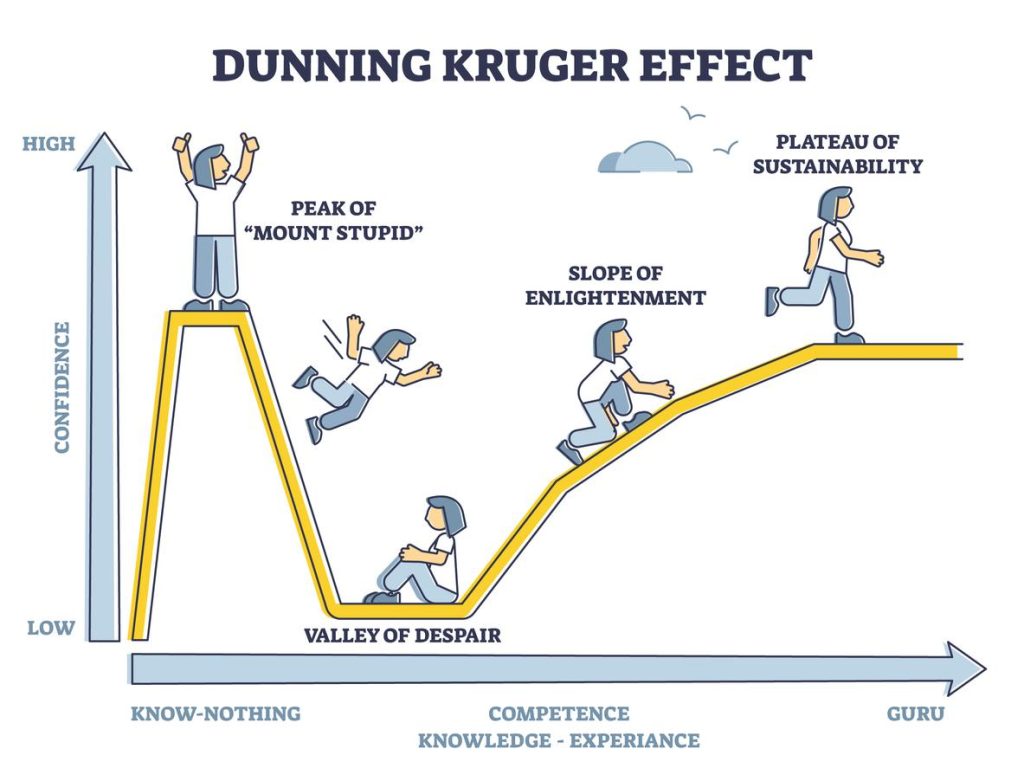
Read moreDavid Dunning and Justin Kruger, researchers at Cornell University, first published their results in 1999, and they came as a serious shock to many. They summed up their…
Read more